Quick Answer
The best soil for raised garden beds is a loose blend that is roughly one quarter to one half organic matter by volume, with a pH near 6.2 to 6.8. For one or two small beds, a ready-to-use bagged raised bed soil such as Coast of Maine Castine Blend or Espoma Organic Raised Bed Mix is the simplest route. For several beds, a bulk topsoil and compost blend (about 70 percent topsoil to 30 percent compost) usually costs less per cubic foot. Whatever you choose, plan to top the bed up with compost every year, because all raised bed soil settles.
How This Guide Was Put Together
Nobody at The Garden Crafter grew a crop in these products for this article. This is a research-based guide, compiled in November 2026 from 22 pages: five university extension publications (Maryland, Iowa State, Washington State, Illinois and Oregon State), two Square Foot Gardening Foundation pages, six manufacturer or brand-owner product pages, three manufacturer how-to articles, four independent gardening guides and roundups, and two retailer or distributor listings. Product details below are the makers’ own stated bag sizes and ingredients.
Quick Picks: Bagged Soils and Amendments at a Glance
| Product | Best For | Key Strength | Main Limitation | Link |
|---|---|---|---|---|
| Coast of Maine Castine Blend Organic & Natural Raised Bed Mix | Organic growers filling one or two beds | Compost-based, ready to use, OMRI listed per the maker | Small bags add up quickly on large beds | Check Current Price on Amazon |
| Espoma Organic Raised Bed Mix | First-time bed fillers who want a no-mixing option | 1.5 cu ft bag with worm castings, meals and mycorrhizae | Mostly processed forest products, so it needs regular feeding | View on Amazon |
| Miracle-Gro Organic Raised Bed & Garden Soil | Peat-free buyers and in-ground amending | Peat-free, OMRI listed, fertilizer included | Not designed for pots or containers | See Product Details on Amazon |
| Black Gold Natural & Organic Raised Bed & Potting Mix | Beds plus large patio containers | One mix labeled for both uses, OMRI listed per the maker | Often easier to find at garden centers than online | View on Amazon |
| FoxFarm Happy Frog Potting Soil | Balcony containers and elevated planters | Container blend with worm castings and bat guano | A potting soil, so costly for filling big beds | Check Current Price on Amazon |
| Wiggle Worm Pure Worm Castings | Refreshing old soil and feeding heavy feeders | Concentrated organic amendment, a little goes a long way | An amendment, not a fill material | See Product Details on Amazon |
| Minute Soil Compressed Coconut Coir Block | Mix-your-own recipes and peat-free blends | Ships compact; one block expands to about 15 gallons | Unamended, so it adds no nutrients | View on Amazon |
What Makes Good Raised Bed Soil
The extension sources agree on the targets more than on any single recipe. University of Maryland Extension puts the goal at 25 to 50 percent organic matter by volume and a pH of 6.2 to 6.8 for most vegetables, flowers and perennials. In practice that means three things:
- Drainage without drought. The mix should drain freely but still hold moisture between waterings. Raised beds dry faster than ground soil, a point Washington State University makes about beds built with purchased fill.
- Enough mineral soil or structure to last. Mixes made only of bark, peat and compost keep shrinking as they decompose. Topsoil in the blend slows that down in deeper beds.
- Clean inputs. Topsoil and compost should come from a seller who can tell you where the material came from.
Raised bed soil vs potting mix vs garden soil
These three bag labels are not interchangeable. Potting mix is a light, soilless product made to stand alone in containers. Bagged garden soil is denser and meant to be dug into the ground. Raised bed soil sits between the two: Scotts Miracle-Gro describes it as roughly an even blend of potting mix and garden soil, on the reasoning that garden soil alone is too dense for a bed and potting mix alone is too light. Maryland Extension adds a useful caution for label readers: bagged products sold as “organic soil” usually contain no topsoil at all, and are typically wood waste, bark fines, compost and peat.
How Much Soil Do You Need?
The formula is simple: length x width x depth, all in feet, gives cubic feet. Convert the depth first by dividing inches by 12. A 4 x 8 bed filled 10 inches deep is 4 x 8 x 0.833, or about 26.7 cubic feet. Divide by the bag size and round up to get bags. Two conversions help: one cubic yard of bulk soil is 27 cubic feet, and one cubic foot is about 7.5 gallons.
The depths below match common kits: 6 inch boards, 10 and 11 inch boards (a nominal 2×12 is about 11 inches tall), 12 inch frames and 17 inch metal beds.
| Bed size | Fill depth | Cubic feet needed | 1.5 cu ft bags | 2 cu ft bags |
|---|---|---|---|---|
| 4 x 4 ft or 2 x 8 ft | 6 in | 8.0 | 6 | 4 |
| 4 x 4 ft or 2 x 8 ft | 10 in | 13.3 | 9 | 7 |
| 4 x 4 ft or 2 x 8 ft | 11 in | 14.7 | 10 | 8 |
| 4 x 4 ft or 2 x 8 ft | 12 in | 16.0 | 11 | 8 |
| 4 x 4 ft or 2 x 8 ft | 17 in | 22.7 | 16 | 12 |
| 3 x 6 ft | 6 in | 9.0 | 6 | 5 |
| 3 x 6 ft | 10 in | 15.0 | 10 | 8 |
| 3 x 6 ft | 11 in | 16.5 | 11 | 9 |
| 3 x 6 ft | 12 in | 18.0 | 12 | 9 |
| 3 x 6 ft | 17 in | 25.5 | 17 | 13 |
| 4 x 8 ft | 6 in | 16.0 | 11 | 8 |
| 4 x 8 ft | 10 in | 26.7 | 18 | 14 |
| 4 x 8 ft | 11 in | 29.3 | 20 | 15 |
| 4 x 8 ft | 12 in | 32.0 | 22 | 16 |
| 4 x 8 ft | 17 in | 45.3 | 31 | 23 |
Bag counts are rounded up to whole bags. A 4 x 4 bed and a 2 x 8 bed share a row because both cover 16 square feet. These figures use the nominal outside dimensions; the inside of a wooden frame is slightly smaller, which gives you a small margin. Keep that margin, because fresh mix settles after the first few waterings.
The bag column explains why bulk delivery exists: a single 4 x 8 bed at 10 inches takes almost exactly one cubic yard, or 18 bags at 1.5 cubic feet. Tall beds are worse. If you are filling a 17 inch or taller bed, you do not have to fill all of it with purchased mix. Our guide to the best way to fill a raised garden bed covers layering coarse organic material in the lower portion, and the same idea matters even more for tall raised garden beds.
Bagged, Mix Your Own, or Bulk Delivery?
No prices are listed here because they vary by region and season. The pattern is consistent, though: bagged soil carries the highest cost per cubic foot and the lowest effort, bulk carries the lowest cost per cubic foot once you buy enough to justify a delivery fee, and mixing your own falls in between depending on which ingredients you choose. Washington State University Extension notes that specialized potting-type mixes are expensive and rarely outperform a simple sand and compost fill, which is worth remembering before filling many beds from bags. Always compare local bulk rates, including delivery, against the bag count from the table above.
| Your situation | Lower budget | Higher budget | Why |
|---|---|---|---|
| One small bed (about 16 cu ft or less) | Mix your own from bagged topsoil and bagged compost | Ready-to-use bagged raised bed soil | Too little volume for a bulk delivery fee to pay off |
| Two or three beds (about 1 to 3 cubic yards) | Bulk topsoil and compost blend, picked up or delivered | Bulk blend for the base, bagged raised bed soil for the top 4 to 6 inches | This is the range where bulk usually becomes cheaper per cubic foot |
| Four or more beds | Bulk delivery of a topsoil and compost blend | Bulk blend plus bagged amendments (castings, coir) worked into the planting zone | Bag counts run into the dozens; hauling alone becomes a job |
| Beds on a patio, roof or other hard surface | Compost and soilless mix at 1 to 1, mixed yourself | Bagged raised bed and potting mix | Weight and drainage matter; little or no topsoil is used |
| No truck access or no place to dump a pile | Bagged topsoil plus bagged compost | Bagged raised bed soil delivered to the door | Bags are the only practical format |
If you buy bulk, ask the questions Maryland Extension recommends: where the soil came from, how it was mixed and stored, and whether test results are available.
Mix-Your-Own Raised Bed Soil Recipes
Four published recipes cover nearly every situation. All ratios are by volume, so a bucket works as a measure.
1. Topsoil and compost blend (best value for deep or multiple beds)
Iowa State University Extension gives two options: about 70 percent topsoil to 30 percent compost, or equal parts topsoil, organic matter (compost, well-rotted manure or peat) and coarse sand. Maryland Extension’s version for beds over compacted clay is compost and purchased topsoil at 1 to 2 or 1 to 1. Iowa State also advises working the mix into the loosened ground a few inches at a time rather than stacking distinct layers, since sharp layers slow water movement and root growth.
2. Equal-thirds soilless mix (lightest, best for shallow beds)
The Square Foot Gardening Foundation recipe, known as Mel’s Mix, is one third peat moss or coco coir, one third coarse vermiculite and one third blended compost. The Foundation’s own example is a 4 x 4 bed filled 6 inches deep: 8 cubic feet total, or four 5-gallon buckets of each ingredient. It drains well and weighs little, but vermiculite in that quantity is the expensive part, which is why this recipe suits shallow beds better than deep ones.
3. Compost and soilless mix (for hard surfaces)
For beds sitting on concrete or pavers, Maryland Extension recommends compost and soilless growing mix at 1 to 1, with topsoil added only up to 20 percent of the volume and only in beds at least 16 inches deep. It suggests a minimum of 8 inches of depth for leafy greens, beans and cucumbers and 12 to 24 inches for tomatoes, peppers and squash.
4. Existing garden soil, improved
If the bed sits over decent garden soil, you may not need much purchased fill. Maryland’s guidance is 2 to 4 inches of compost mixed into the top 4 inches. Choosing the compost itself is a separate decision, covered in our guide to compost for raised garden beds.
Recommendations by Buyer Type
- One small bed: a ready-to-use bagged mix. Coast of Maine Castine Blend or Espoma Organic Raised Bed Mix; use the bag table above.
- Many beds: bulk topsoil and compost at roughly 70 to 30, then spend the bagged-product budget on compost and worm castings for the top few inches.
- Organic growers: choose products whose makers state an OMRI listing (Coast of Maine Castine Blend, Miracle-Gro Organic Raised Bed & Garden Soil and Black Gold Natural & Organic in this list), and confirm the current listing if certification matters to you.
- Tomatoes and other heavy feeders: depth and feeding matter more than brand. Aim for at least 12 inches of root zone, a compost-rich mix, and a fertilizer program. Both Espoma and Scotts say to begin regular feeding about 30 days after planting.
- Containers on a balcony: use a potting soil or a mix labeled for containers, such as FoxFarm Happy Frog or Black Gold Raised Bed & Potting Mix. Skip topsoil and products labeled only for in-ground or raised bed use.
- Refreshing old soil: do not replace it. Top up with compost, and add worm castings or coir where the bed has become tired or hard to re-wet.
Still choosing the bed itself? Size and depth decide your soil bill, so settle that first with our roundup of the best raised garden beds.
The Products in Detail
Coast of Maine Castine Blend Organic & Natural Raised Bed Mix

Best for: organic vegetable growers filling one or two beds. Not for: large multi-bed projects on a tight budget, or indoor pots.
Key features: Coast of Maine lists the ingredients as compost, sphagnum peat moss, aged bark, wood biochar, mycorrhizae, and a fertilizer derived from lobster and crab shell, kelp meal and earthworm castings. The maker sells it in 1 and 2 cubic foot bags, describes it as ready to use, and links an OMRI certificate.
- Pros: compost is the lead ingredient rather than bark; no blending needed; maker-stated OMRI listing.
- Cons: the 1 cubic foot bag means 16 bags for a 4 x 4 bed at 12 inches; the stated nitrogen is low and slow-release, so hungry crops will still need feeding; contains peat.
- Buying considerations: check which bag size a listing is for before comparing. The maker’s own page showed limited online availability when checked, so stock may vary.
Espoma Organic Raised Bed Mix

Best for: first-time raised bed gardeners who want to open bags and plant. Not for: gardeners who want a mineral-soil component or a peat-free mix.
Key features: a 1.5 cubic foot bag. Espoma’s product page lists 70 to 80 percent processed forest products with sphagnum peat moss, perlite and limestone, plus earthworm castings, alfalfa meal, kelp meal, feather meal, yucca extract and mycorrhizal fungi. Espoma’s coverage chart gives 11 bags for a 4 x 8 bed at 6 inches and 22 bags at 12 inches, which matches the table above.
- Pros: widely recommended in the roundups reviewed; standard bag size makes the math easy; perlite and bark keep it loose.
- Cons: forest products make up most of the bag, and bark-heavy mixes keep breaking down and settling; Espoma itself directs buyers to add a starter fertilizer at planting and begin regular feeding after 30 days; one independent guide quoted a different forest-products percentage from the label, so formulations may vary by region or year.
- Buying considerations: the maker describes it as natural and organic but its page does not state an OMRI listing, so check the bag if that matters.
Miracle-Gro Organic Raised Bed & Garden Soil

Best for: buyers who want a peat-free bagged soil that also works for amending in-ground beds. Not for: pots, window boxes or balcony planters.
Key features: a 1.5 cubic foot bag. Scotts describes it as peat-free and lists the contents as fertilizer plus one or more of processed forest products, compost, processed manure and similar recycled organic materials. The maker states it is OMRI listed and feeds for up to two months, and gives an in-ground rate of a 3 inch layer mixed into the top 6 inches of native soil.
- Pros: peat-free; dual use for beds and ground; maker-stated OMRI listing; starter fertilizer included.
- Cons: the “one or more of” ingredient wording means the contents can differ between bags and regions; the maker says it is not designed for containers; the built-in feed is short-lived for a full tomato season.
- Buying considerations: do not confuse it with Miracle-Gro’s separate potting mixes, which are the right pick for containers.
Black Gold Natural & Organic Raised Bed & Potting Mix
Best for: gardeners running a raised bed and large patio pots from the same bags. Not for: anyone who needs guaranteed online availability.
Key features: a 1.5 cubic foot bag from Sun Gro Horticulture. The maker lists bark, Canadian sphagnum peat moss, compost, earthworm castings, calcium silicate and organic fertilizer, describes it as ready to use in outdoor raised beds or large containers, and shows the OMRI Listed mark.
- Pros: labeled for both beds and big containers; castings and compost included; maker-stated OMRI listing.
- Cons: bark and peat based, so expect settling; the maker’s page gives little planting or feeding guidance; a light mix dries quickly in shallow beds.
- Buying considerations: Black Gold sells several similar-looking bags (all purpose, flower and vegetable, seedling). Match the full product name.
FoxFarm Happy Frog Potting Soil

Best for: balcony containers, grow bags and small elevated planters. Not for: filling a full-size ground-level bed.
Key features: FoxFarm sells it in 12 quart and 2 cubic foot bags and names earthworm castings, bat guano, aged forest products and soil microbes among the ingredients. Its stated uses are all container plantings.
- Pros: a true container blend, which is what elevated planters and pots need; the 2 cubic foot bag suits several large pots.
- Cons: the maker’s page gives only a partial ingredient list; no OMRI listing was found in the sources checked; using potting soil to fill a 4 x 8 bed is an expensive way to buy volume.
- Buying considerations: FoxFarm’s Ocean Forest is a different, separately formulated product. Confirm the name and bag size on the listing.
Wiggle Worm Pure Worm Castings
Best for: refreshing existing beds and adding organic nutrition for heavy feeders. Not for: use as the main fill.
Key features: sold by weight (a 15 pound bag is the common size) and described by its distributor as pure worm castings and a registered organic fertilizer with OMRI and CDFA certification. The distributor’s only usage guidance is a small handful per transplant.
- Pros: a gentle amendment that fits any of the recipes above; easy to store; a little covers many planting holes.
- Cons: no published per-square-foot rate was found for beds; costly if used as a bulk ingredient; it will not fix a mix that drains badly.
- Buying considerations: several bag weights exist, so compare by pound.
Minute Soil Compressed Coconut Coir Block
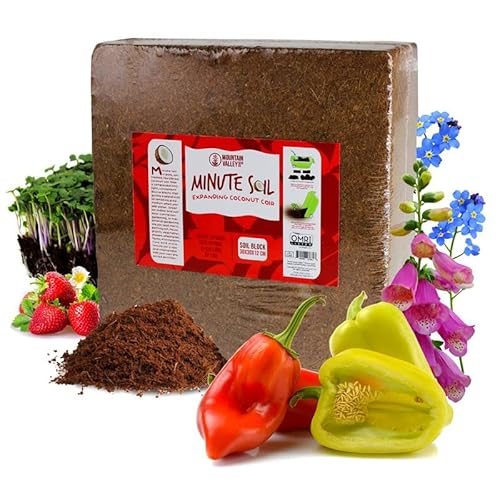
Best for: mix-your-own gardeners who want a peat alternative delivered in a small box. Not for: anyone expecting a complete, plantable soil.
Key features: the seller, True Leaf Market, says one block (about 30 x 30 x 12 cm) expands to roughly 15 gallons, which is about 2 cubic feet, after soaking in about 5.5 gallons of water. It is described as raw and unamended, and as OMRI listed.
- Pros: compact to ship and store; stands in for peat in the equal-thirds recipe; helps a tired bed hold water.
- Cons: contributes no nutrients; needs a wheelbarrow or tote and time to hydrate; yield varies a little from block to block.
- Buying considerations: an equal-thirds mix for a 4 x 4 bed at 6 inches needs about 2.7 cubic feet of coir, so plan on two blocks. A fertilized version (Minute Soil+) is a different product.
What Not to Put in a Raised Bed
- Dense native soil on its own. Used alone it compacts and drains poorly, and it often carries weed seeds.
- Fresh manure. It can burn plants and carries food-safety risks. Use only well-rotted or composted manure.
- Compost or peat alone. Pure compost can create nutrient imbalances, and a bed dominated by peat or coir can turn soggy.
- Untested soil from unknown sites. Maryland Extension advises a lead test before growing food and says not to grow vegetables where total lead exceeds 400 parts per million.
- Hay, grass clippings or manure with unknown herbicide history. Oregon State University Extension explains that some pasture herbicides survive composting and stunt or curl broadleaf crops such as tomatoes, beans and peas. Its suggested check is a simple pot test: grow pea seeds in the suspect compost blended with clean potting mix, alongside control pots, and compare them after two to three weeks of growth.
- Waxed or glossy cardboard at the base. Plain cardboard is the usual choice for smothering grass.
What goes under and around the soil matters too. See our guides on what to put on the bottom of a raised bed and on plastic liners for raised garden beds before you fill.
Living With Raised Bed Soil: Settling, Top-Ups and Replacement
Settling is normal. University of Illinois Extension calls it simply a fact of raised bed gardening: fresh fill has little structure, and organic matter keeps decomposing.
Top up yearly. Illinois Extension suggests a few inches of compost or good topsoil each year to keep pace, and Washington State University Extension says framed beds need replenishing every year or two. Avoid routine tilling of an established bed, which breaks down structure and speeds settling, and consider an off-season cover crop to keep roots in the soil.
You rarely need to replace it. None of the sources reviewed recommends routine yearly replacement for home beds; the Square Foot Gardening Foundation says its mix can last ten years or more with a trowel of compost added at each replanting. Scotts does advise starting with fresh soil each season for its bagged product, which is a maker’s instruction rather than extension guidance. Full replacement makes sense in specific cases: confirmed herbicide or lead contamination, a persistent soil-borne disease, or a mix so decomposed that it stays waterlogged.
Retest and protect. Maryland Extension suggests a soil test about a year after building. Cover the surface with mulch for raised bed gardens to slow drying, and because raised beds can need water daily in hot weather, consider drip irrigation for raised beds.
Frequently Asked Questions
Can I use regular garden soil in a raised bed?
Not by itself. Native soil used alone tends to compact and drain poorly inside a frame. It can be part of the blend when mixed with compost, as in the 70 to 30 topsoil and compost recipe, provided it is free of contaminants.
Is potting soil suitable for a raised garden bed?
It works, and for small elevated planters it is the right choice, but it is the most expensive way to fill a large bed and it shrinks as it decomposes. For ground-level beds, a raised bed mix or a topsoil and compost blend is the better fit.
What is the difference between raised bed soil and potting soil?
Potting soil is a light, soilless mix made to stand alone in containers. Raised bed soil is somewhat heavier and coarser, positioned between potting mix and garden soil, and is usually pre-enriched with organic nutrients.
How many bags of soil do I need for a 4×8 raised garden bed?
At 6 inches deep, 16 cubic feet: 11 bags of 1.5 cubic feet or 8 bags of 2 cubic feet. At 12 inches deep, 32 cubic feet: 22 or 16 bags. At 10 inches it is about one cubic yard.
How much compost should I add to raised bed soil?
For a new bed, enough to reach 25 to 50 percent organic matter by volume. For an existing bed, a top-dressing of a couple of inches each year is the common extension advice.
What pH should raised bed soil have?
About 6.2 to 6.8 suits most vegetables and flowers. A soil test is the only reliable way to know, so avoid adding lime or sulfur on guesswork.
Do I need to replace the soil in my raised beds every year?
No. Top it up with compost as it settles. Replace it only for contamination, persistent disease or a mix that has broken down and no longer drains.
The Bottom Line on Raised Bed Soil
Work out your cubic feet first, because volume decides everything else. Under about one cubic yard, bagged raised bed soil is a reasonable convenience buy, with Coast of Maine Castine Blend and Espoma Organic Raised Bed Mix the most frequently named options in our sources. Beyond that, a bulk topsoil and compost blend at about 70 to 30 does the heavy lifting, and bagged compost, castings and coir are best spent on the top few inches where roots feed. Then budget for a compost top-up every spring.